Red Skin Acne Treatment: A Complete Guide to Clearing Acne Marks and Redness
If you are dealing with persistent acne redness, lingering acne marks, or skin that flares with every new breakout, you are not alone. For many people in Scottsdale, AZ, and the surrounding area, acne does not just mean active blemishes. It means the redness, texture changes, and discoloration that can remain long after acne heals. This guide covers the full landscape of red skin acne treatment: why acne causes lasting redness, how post-acne marks differ from acne scars, which topical treatments and professional treatments are available, and how to build a skincare routine that supports clearer, more even skin over time. Whether you are managing moderate acne, cystic acne, or adult acne that has been slow to respond to what you have tried so far, this resource will help you make more confident decisions about your care.
If you would like to discuss your specific concerns with a specialist, contact Clear Dermatology & Aesthetics Center at (480) 398-1550.
Why Acne Causes Redness and Marks
Acne vulgaris is a skin condition that develops when plugged hair follicles become inflamed. Oil production, dead skin cells, and acne-causing bacteria combine inside the follicle to trigger the immune response that produces inflamed pimples. That inflammatory process is exactly why acne so often leaves redness behind, even after the blemish itself is gone.
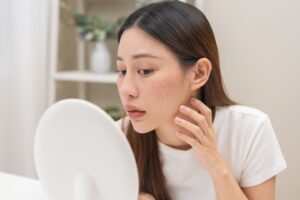
When the skin responds to inflammation, small blood vessels near the surface dilate. This creates the characteristic skin redness visible around active blemishes and sometimes extending into the surrounding skin. In many cases, this vascular response lingers after the acne heals because the skin is still working through its natural healing process. This type of lingering red or pink discoloration is called post-inflammatory erythema. It is not a scar and does not involve structural changes to the skin, but it can be persistent and take weeks or months to fade on its own.
Excess sebum also plays a role. When excess oil production is ongoing, the cycle of clogged hair follicles and inflammatory responses keeps repeating. This repeated inflammation can make acne redness feel like a constant feature rather than a temporary one. Addressing both active acne and the underlying drivers of excess oil is essential to breaking that cycle effectively.
Acne Marks vs. Acne Scars: Understanding the Difference
One of the most common sources of confusion for patients managing acne is the distinction between acne marks and acne scars. These two concerns look similar but represent distinct processes and respond to different treatments.
Post Acne Marks and Discoloration
Post-acne marks are flat areas of discoloration that remain after a blemish resolves. They do not involve any change in skin texture or structure. On lighter skin tones, these marks typically appear pink or red and are associated with post-inflammatory erythema. On darker skin tones, post-acne marks are more likely to appear as brown or dark spots, which is a form of post-inflammatory hyperpigmentation. This distinction matters because the treatments that most effectively reduce redness-based marks may differ from those that address dark marks and hyperpigmentation.
Post-inflammatory hyperpigmentation occurs when the skin produces excess melanin in response to inflammation. It is particularly common in individuals with medium to darker skin tones and can be more persistent than the red marks seen on lighter skin tones. A targeted treatment approach that accounts for skin tone is especially important here to avoid worsening discoloration.
True Acne Scars
Acne scars involve actual changes to the skin’s structure. Depressed scars, sometimes called atrophic scars, form when the skin loses collagen during the healing process. Raised or hypertrophic scars involve excess collagen. Unlike post-acne marks, true acne scars do not fade on their own over time and generally require professional treatments to improve skin texture and appearance. Patients often have a combination of both acne marks and acne scars, which is why a thorough evaluation is the starting point for any meaningful treatment plan.
Topical Treatments for Acne Redness and Marks
For many patients, topical treatments are the foundation of both an active acne treatment regimen and an approach to reducing the acne marks that follow breakouts. The most effective products work by addressing multiple aspects of acne: excess sebum, dead skin cells, acne-causing bacteria, and inflammation.
Benzoyl Peroxide
Benzoyl peroxide is one of the most widely used ingredients in acne care and is available in both over-the-counter treatments and prescription formulations. It works primarily by reducing acne-causing bacteria within the follicle and by helping to unclog pores. Benzoyl peroxide is especially effective for inflammatory acne, where visible, inflamed pimples are the primary concern. It can also reduce acne redness associated with active breakouts by decreasing the bacterial load that drives the inflammatory response. Because benzoyl peroxide can be drying, starting with a lower concentration and applying it to a small area first is typically advisable, particularly for sensitive skin.
Salicylic Acid
Salicylic acid is a beta-hydroxy acid that works by penetrating into the hair follicles to dissolve the combination of dead skin cells and excess oil that leads to clogs. It is particularly well-suited for acne-prone skin because it gently exfoliates the lining of the pore rather than just the surface. Regular use of salicylic acid can help prevent future breakouts by keeping pores cleaner and may gradually improve the texture and tone of skin dealing with post-acne marks over time. Salicylic acid is found in cleansers, toners, and leave-on treatments at varying concentrations.
Topical Retinoids
Topical retinoids are considered among the most evidence-supported options for both treating acne and improving acne marks. They work by increasing cell turnover, which helps clear dead skin from the follicle, reduces excess sebum production, and gradually brings newer, more evenly pigmented skin to the surface. Topical retinoids can improve skin texture, reduce the visibility of post-acne marks, and may help address mild acne scars with consistent long-term use. They do require an adjustment period and carry a risk of skin thinning with improper use, so guidance from a board-certified dermatologist is valuable when incorporating them into a skincare routine. Prescription-strength topical retinoids are generally more effective than over-the-counter retinol formulations for moderate to severe acne concerns.
Azelaic Acid
Azelaic acid is a versatile anti-inflammatory ingredient that addresses multiple aspects of acne and post-acne discoloration at once. It reduces acne-causing bacteria, helps to unclog pores, and inhibits the excess melanin production that leads to post-inflammatory hyperpigmentation. Azelaic acid is particularly valued for its compatibility with darker skin tones because it targets pigmentation without the irritation risk of some other brightening ingredients. It can be a strong option for patients whose primary concern is reducing the dark marks and persistent acne redness that linger after breakouts. Prescription-strength azelaic acid formulations are available for patients who need a more concentrated approach.
Topical Antibiotics
Topical antibiotics, typically clindamycin or erythromycin, are frequently used to reduce acne-causing bacteria and address inflammatory acne. They are most effective when combined with benzoyl peroxide, as this pairing also helps reduce the risk of bacterial resistance with long-term use. Topical antibiotics are often part of a broader treatment plan for moderate acne that includes other active ingredients alongside them.
Additional Anti-Inflammatory Ingredients
Several other ingredients with anti-inflammatory properties can support acne-prone skin when incorporated thoughtfully. Niacinamide helps to reduce redness and may assist in fading post-acne marks by regulating oil production and supporting the skin barrier. Tea tree oil has demonstrated some antimicrobial activity and mild anti-inflammatory effects in research, though it is generally considered a supportive rather than primary treatment. Aloe vera is frequently used to calm skin redness and support the natural healing process following a breakout. These options may complement a broader skincare routine, though they are typically less potent than prescription or clinical-grade actives.
Professional Treatments for Acne Marks and Redness
When topical treatments alone are not enough to address acne scars, significant post-acne marks, or ongoing severe acne, professional treatments offer more targeted and intensive options. At Clear Dermatology & Aesthetics Center, a thorough evaluation helps determine which approach best suits each patient’s skin tone, the nature of their acne marks, and their overall skin health.
Chemical Peels
Chemical peels involve applying a chemical solution to the skin to encourage the controlled shedding of the outer layers. This process accelerates the removal of dead skin, reduces the visibility of post-acne marks and surface-level discoloration, and may improve skin texture over a series of treatments. Glycolic acid and salicylic acid are commonly used in chemical peels for acne-prone skin. Lighter peels can be well-tolerated with minimal downtime for most patients, while deeper formulations are reserved for more significant concerns and require more recovery time. Chemical peels are generally adapted to the patient’s skin tone to minimize the risk of post-treatment discoloration, which is especially important for patients with medium to darker skin tones.
Laser Treatments and Light Therapy
Laser therapy and light therapy options address acne redness, post-inflammatory erythema, and acne scars through different mechanisms. Vascular-targeted laser treatments can reduce the visible redness associated with post-inflammatory erythema by targeting the dilated blood vessels contributing to persistent skin redness. Fractional laser treatments work by creating controlled zones of thermal energy within the skin, stimulating collagen remodeling that may improve the appearance of acne scars and uneven skin texture over time. Light therapy, including LED-based options, can have anti-inflammatory effects and may support the skin’s natural healing process. The most appropriate laser or light-based option depends on the patient’s specific concerns, skin tone, and the types of acne marks present. Patients with darker skin tones require careful provider selection, as some laser treatments carry a higher risk of post-treatment hyperpigmentation in higher-melanin skin.
Oral Medications
For patients managing severe acne or cystic acne that has not responded adequately to topical treatments, oral medications may be appropriate. Oral antibiotics can reduce acne-causing bacteria systemically and address inflammatory acne that is too widespread or deep for topical treatments to reach effectively. For patients who are appropriate candidates, isotretinoin is an oral medication that addresses multiple drivers of acne, including excess oil production and plugged hair follicles; it carries specific monitoring requirements and is prescribed and overseen by a dermatologist. Certain hormonal therapies may be appropriate for adult acne in women when hormonal factors are contributing to the pattern of breakouts. These are medical decisions that involve a detailed clinical evaluation and should not be self-initiated.
Combination Approaches
Many patients with both active acne and post-acne marks benefit from a combination of professional treatments and a consistent at-home skincare routine. For example, a dermatologist-supervised regimen might include a topical retinoid and azelaic acid for daily use alongside a series of chemical peels to accelerate improvement in post-acne marks, with laser treatments incorporated once active acne is well-controlled. The sequencing and combination of specific treatments matters, and this is where working with a board-certified dermatologist rather than pursuing treatments independently makes a significant difference in outcomes and safety.
Skin Tone Considerations in Acne Treatment
Acne affects people across all skin tones, but the way acne marks appear and how they respond to treatment varies meaningfully depending on skin tone. This is one of the most important dimensions of effective acne care and one that is sometimes underemphasized in general acne guidance.
For patients with lighter skin tones, post-acne marks most commonly present as red or pink discoloration associated with post-inflammatory erythema. These marks are related to blood vessel changes and often fade gradually, though professional treatments can accelerate that process. For patients with medium to darker skin tones, acne marks are more likely to present as persistent brown or dark spots driven by post-inflammatory hyperpigmentation. This type of discoloration can be more stubborn and may worsen with aggressive treatments that are not calibrated for higher-melanin skin.
Any treatment plan that includes chemical peels, laser treatments, or potent topical agents should account for skin tone to minimize the risk of additional discoloration. Azelaic acid and topical retinoids are generally considered more universally appropriate across skin tones than some other brightening ingredients. When choosing a provider for professional treatments, experience treating diverse skin tones is a meaningful credential to consider.
Building a Skincare Routine for Acne-Prone Skin
A consistent skincare routine is one of the most impactful things you can do to support acne treatment and reduce the recurrence of acne marks. The goal is to address the drivers of acne, support the skin barrier, and help post-acne marks fade as efficiently as the natural healing process allows.
Cleansing
Start with a gentle cleanser that removes excess oil and impurities without stripping the skin barrier. Harsh facial scrubs and overly aggressive cleansing can increase skin redness and trigger more oil production in response to dryness, which is counterproductive for acne-prone skin. A non-comedogenic, low-irritation cleanser used twice daily is appropriate for most skin types, including combination skin.
Active Ingredients
Introduce active ingredients gradually to allow your skin to adjust and to identify how it responds to each one. Layering too many actives at once, particularly topical retinoids, benzoyl peroxide, and salicylic acid simultaneously, can lead to irritation that worsens skin redness and compromises the skin barrier. A dermatologist can help you sequence and combine these ingredients safely based on your individual skin type, the severity of your acne, and your goals for addressing post-acne marks.
Sun Protection
Sun protection is a non-negotiable element of any skincare routine that includes active treatments for acne marks. Sun exposure can deepen post-inflammatory hyperpigmentation and slow the fading of red post-acne marks by triggering additional pigment production. A broad-spectrum sunscreen used daily helps protect the skin from this effect and supports the overall effectiveness of your treatment regimen. This is especially relevant in Scottsdale, where UV exposure is intense year-round. Choosing a sunscreen formulated for acne-prone skin, such as a non-comedogenic, lightweight option, reduces the concern that it will contribute to future breakouts.
Moisturizing
Moisturizing is important even for oily or acne-prone skin. Many acne treatments, particularly topical retinoids and benzoyl peroxide, can be drying, and a compromised skin barrier leads to increased sensitivity and potential irritation. A lightweight, non-comedogenic moisturizer helps maintain the barrier and allows acne-fighting skincare products to function more effectively. Ingredients like niacinamide in moisturizers can offer additional acne redness reduction as a secondary benefit.
Why Choose Clear Dermatology & Aesthetics Center in Scottsdale?
When it comes to acne marks, persistent skin redness, and acne scars, the expertise of your provider shapes both the safety and the outcome of your care. Clear Dermatology & Aesthetics Center is a physician-led practice serving patients across North Scottsdale and Paradise Valley with a full spectrum of medical and aesthetic dermatology services.
Dr. Brenda LaTowsky, M.D., is a board-certified dermatologist and a 10-time consecutive Top Doctor, a peer-voted recognition that reflects a consistent standard of clinical excellence. She brings fellowship training in laser and cosmetic dermatology, which is directly relevant to professional treatments for acne scars, acne marks, and skin redness. The practice is also home to Investigate MD, an on-site clinical research program with more than 65 completed trials that keeps the team connected to emerging evidence across skin conditions. Recognized by Newsweek as one of America’s Best Dermatologists, Clear Dermatology holds certifications with the American Board of Dermatology, the American Academy of Dermatology, the American Society for Dermatologic Surgery, and the American Society for Laser Medicine and Surgery.
The team at Clear Dermatology includes physician assistants, nurse injectors, and licensed aestheticians, which means patients receive access to comprehensive, coordinated care across all tiers of acne treatment. Whether you are seeking a personalized topical treatment plan for acne-prone skin or professional treatments for acne scars and post-acne marks, care at Clear Dermatology is grounded in clinical evidence and delivered in a warm, professional setting.
Have questions that go beyond what this guide has covered? Dr. Brenda LaTowsky, M.D., and the Clear Dermatology team can provide individualized guidance based on your skin tone, acne history, and goals. Call (480) 398-1550 or schedule a consultation online to get started.
Frequently Asked Questions
How do I know whether my discoloration is post-inflammatory erythema or post-inflammatory hyperpigmentation?
The distinction is primarily based on color and skin tone. Post-inflammatory erythema appears as pink or red marks and is more common in people with lighter skin tones. Post-inflammatory hyperpigmentation presents as brown or darker spots and is more frequently seen in people with medium to darker skin tones. Both are forms of post-acne marks, but they involve different underlying processes and may respond better to different treatment approaches. A dermatologist can evaluate your specific discoloration and recommend the most appropriate targeted treatment.
Can acne marks and acne scars be treated at the same time?
In many cases, yes. Certain professional treatments, such as a series of chemical peels or specific laser treatments, may address both post-acne marks and mild acne scars simultaneously by promoting cell turnover and collagen remodeling. However, the priority and sequence of treatments depend on whether active acne is still present, your skin tone, and the types of acne scars involved. Your dermatologist will develop a treatment plan that sequences interventions appropriately for your individual situation.
How long does it typically take to see improvement in acne marks with topical treatments?
Topical treatments for acne marks, particularly topical retinoids and azelaic acid, generally require consistent daily use over several weeks to months before visible improvement becomes apparent. The natural healing process for post-inflammatory erythema can take anywhere from a few weeks to six months or longer, depending on the depth of discoloration, skin tone, and how well future breakouts are controlled during that time. Professional treatments can accelerate this timeline for many patients, and results vary by individual.
Is it safe to use benzoyl peroxide and topical retinoids together?
Using benzoyl peroxide and topical retinoids in the same routine requires some care. Applying them at the same time can deactivate certain retinoid formulations and increase the likelihood of irritation. Many dermatologists recommend applying one in the morning and one at night, or using benzoyl peroxide as a wash rather than a leave-on product when combining them. A board-certified dermatologist can help you structure a treatment regimen that maximizes the benefit of both ingredients while minimizing the risk of excess dryness or skin redness.
What should I know about laser treatments for acne scars if I have a darker skin tone?
Laser treatments for acne scars require careful selection in patients with darker skin tones because some laser wavelengths carry a higher risk of triggering post-inflammatory hyperpigmentation in skin with more melanin. Certain fractional lasers and non-ablative devices have been used more safely across a broader range of skin tones, but this depends heavily on the specific device settings, provider experience, and pre-treatment preparation. Choosing a dermatologist with fellowship training in laser procedures and documented experience treating diverse skin tones is an important consideration. During your consultation, be sure to discuss your full skin tone history and any previous reactions to treatments.
Does the Scottsdale climate affect acne or post-acne skin concerns?
The Arizona desert climate presents some specific considerations for acne-prone skin. High UV exposure year-round makes consistent sun protection especially important for anyone managing acne marks or receiving professional treatments, since sun exposure can significantly worsen post-inflammatory hyperpigmentation and slow the fading of red marks. Heat and sweat can also contribute to pore congestion in some patients. Adjusting your skincare routine seasonally and maintaining a strong daily sunscreen habit helps protect the progress made through any acne treatment plan.
How do membership programs at Clear Dermatology support ongoing acne care?
Clear Dermatology & Aesthetics Center offers facial and device membership programs that can support patients managing acne marks and ongoing skin concerns by providing access to regular professional treatments at a structured cadence. Consistent professional treatments, such as periodic chemical peels or device-based sessions, tend to deliver better cumulative results than one-time interventions. Membership programs make it more practical to maintain that consistency. During your consultation, a provider can walk you through which membership options align with your treatment goals.
When is it appropriate to consider oral medications for acne?
Oral medications are typically considered when acne is moderate to severe, when it involves deep cystic acne that topical treatments cannot adequately reach, or when a patient has not responded sufficiently to a thorough topical treatment plan. Oral antibiotics, hormonal therapies, and isotretinoin each have specific candidacy criteria, monitoring requirements, and considerations that make them a medical decision rather than a self-directed one. A board-certified dermatologist evaluates factors, including the pattern and severity of your acne, your overall health, any medications you are currently taking, and your treatment history, before recommending an oral medication approach.
Understanding the full picture of red skin acne treatment, from what drives acne redness and post-acne marks to which topical and professional treatments can help address them, puts you in a stronger position to take meaningful steps forward. Every person’s skin is different, and the most effective approach is one that accounts for your skin tone, your specific types of acne marks or acne scars, and your goals for long-term skin health. The next step is a personalized consultation where those specifics can be evaluated by a qualified provider. Contact Clear Dermatology & Aesthetics Center at (480) 398-1550 or schedule a consultation online to discuss your individual treatment plan with a board-certified dermatologist in Scottsdale, AZ. Individual results may vary.

Our Team
Clear Dermatology is a trusted medical, cosmetic, and aesthetic dermatology practice serving Scottsdale and Paradise Valley, Arizona. Our team includes a Board-Certified facial plastic and reconstructive surgeon, d fellowship-trained dermatologists, a skilled Mohs surgeon, certified physician assistants, and licensed, CMLT aestheticians dedicated to providing comprehensive, evidence-based care in a clean and friendly environment. We believe in partnering with each patient to protect and enhance their skin year-round, offering advanced medical treatments, cutting-edge cosmetic procedures, and personalized guidance for long-term skin health. With two convenient locations, and commitments to exceptional service and care, Clear Dermatology is proud to help individuals and families achieve healthy, beautiful skin at every age.