Skin Cancer Treatment
Skin cancer is one of the most common yet highly treatable forms of cancer when detected early. The primary goal of treatment for skin cancer is to kill cancer cells while preserving as much healthy tissue as possible, whether addressing superficial skin cancers, squamous cell skin cancer, or melanoma skin cancer. Depending on the type and skin cancer stages, care may include skin cancer surgery, radiation therapy, or other advanced treatment options designed to remove abnormal tissue and eliminate remaining skin cancer cells. From early non melanoma skin cancer to advanced skin cancer, identifying and treating abnormal cells promptly plays a critical role in achieving the best possible outcomes.
What is Skin Cancer?
The most common type of cancer in the United States is skin cancer, with more diagnoses than breast, lung, prostate, and colon cancer combined. Skin cancer affects about 2 million people each year, with about 1 in 5 Americans developing skin cancer during their lifetime. It affects anyone, regardless of their skin color, and is easily preventable with the right steps. If not prevented altogether, it can be easily treated when it’s detected early by a board-certified dermatologist.
Types of Skin Cancer
There are many different types of skin cancer, but the three most common types are as follows:
Basal cell carcinoma (BCC)
Basal cell carcinoma (BCC) is the most common type of skin cancer – in fact, about 80% of skin cancers are BCCs. It often occurs in areas that are exposed to sunlight or UV rays from tanning (like the head, neck, and arms). However, it can also form anywhere on the body. If left untreated or not diagnosed early, BCCs can spread into the nerves and bones, causing more significant damage and health problems. It’s rarely fatal but can cause disfigurement to the area around it and require more extensive reconstruction.
Squamous cell carcinoma (SCC)
Squamous cell carcinoma (SCC) is the second most common type of skin cancer. It forms in areas that get frequent sun exposure, like the ears, face, neck, back, chest, and arms. Like BCCs, they can develop deep in the skin and cause significant damage to the surrounding area. Detecting SCCs early can help prevent it from spreading to other areas.
Melanoma
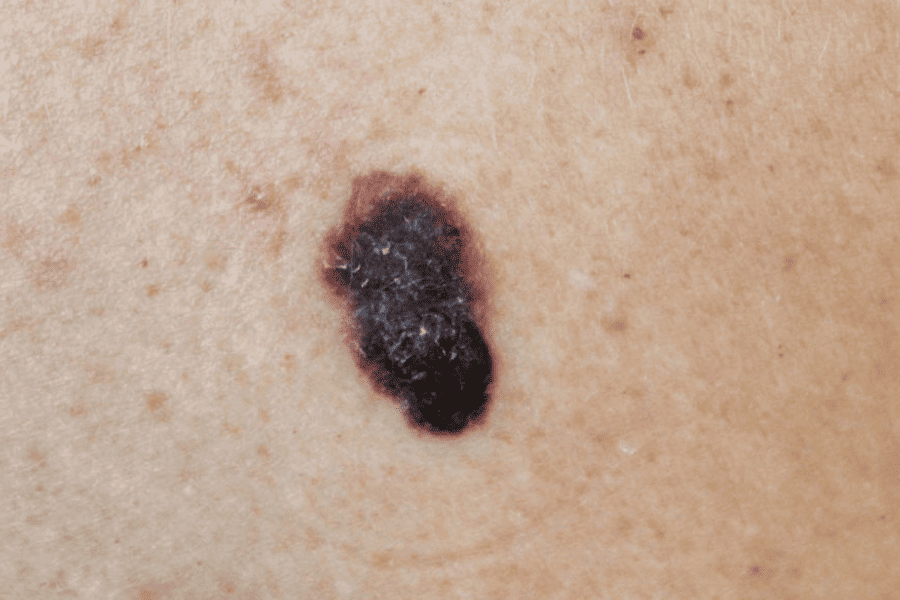
Melanoma is the most dangerous form of skin cancer and causes the most deaths out of any type, even if it only accounts for about 1% of all skin cancer diagnoses. It can occur anywhere on the body, typically beginning in a mole or appearing as a new dark spot. Tanning and sunburn are the biggest risk factors for melanoma. Early treatment is critical because it can quickly spread to organs and lymph nodes. Even after treatment, people diagnosed with melanoma have a significant risk of developing more melanomas.
What does Skin Cancer look like?
The single most effective way to treat skin cancer is by detecting it early, whether through a self-exam at home or a skin cancer screening with a board-certified dermatologist. Although different types of skin cancer look different, the most indicative symptom of skin cancer is change over time. If you notice a spot that begins to change over weeks to months, it’s essential to see a dermatologist right away for treatment to destroy abnormal tissue.
The two more common types of skin cancer can be detected as such:
- SCCs often look like a firm, red bump. It can also look like a scaly patch, open sore, or wart that crusts, itches, or bleeds.
- BCCs often look like a pinkish patch of skin or pearl-like bump, occurring more commonly in people with fair skin.
The ABCDEs of Melanoma
Melanoma can be detected early using the following indicators:
A: Asymmetry
Moles are normally symmetrical and appear generally round in shape. If you notice a mole where the two sides appear different in any way, it can be a warning sign for melanoma.
B: Border
Benign moles are easily distinguishable from the skin around them. If the border of a mole appears blurry, uneven, scalloped, irregular, or notched, it may be melanoma.
C: Color
Normal moles are typically a single shade of dark brown with no variation in color throughout. Melanomas can display different colors like tan, black, brown, red, blue, or white from one area to another.
D: Diameter
Most moles are small in diameter (less than 6mm, or the size of a pencil eraser). Melanomas may grow larger than this, although they may start small in size.
E: Evolving
The most important indicator of melanoma is change over time. If you notice any emergence of the above indicators, as well as bleeding, itching, or crusting, make sure to see a dermatologist immediately.
What Causes Skin Cancer?
Skin cancer is primarily caused by exposure to ultraviolet (UV) radiation from the sun or tanning beds. UV rays damage the DNA in skin cells, leading to mutations that cause abnormal growth. Other risk factors include fair skin, a history of sunburns, excessive sun exposure, a weakened immune system, and a personal or family history of skin cancer. While anyone can develop skin cancer, taking preventative measures such as wearing sunscreen and avoiding peak sun hours significantly reduces risk.
Before Your Skin Cancer Procedure
Before your skin cancer procedure, your dermatologist will perform a thorough examination and may take a biopsy to confirm the diagnosis. Once the type and extent of the skin cancer are identified, a personalized treatment plan will be created based on the lesion’s size, location, and severity. You will receive detailed instructions to help you prepare, which may include avoiding certain medications or supplements that increase bleeding risk. Our team will ensure you understand every step of the process so you feel confident and informed going into treatment.
Your Skin Cancer Procedure
Skin cancer procedures are typically performed in the office using local anesthesia to keep you comfortable. Depending on the diagnosis, treatment may involve surgical excision, Mohs surgery, or other targeted therapies designed to remove cancerous tissue or destroy cancer cells while preserving as much surrounding healthy skin as possible. Your dermatologist will carefully remove the affected area and, if necessary, send tissue samples for evaluation to ensure clear margins. The goal is complete cancer removal with the best possible cosmetic and functional outcome.
After Your Skin Cancer Procedure
After your procedure, you will receive specific wound care instructions to promote proper healing and reduce the risk of infection. Mild swelling, redness, or tenderness is normal and typically resolves within several days. Follow-up appointments may be scheduled to monitor healing and confirm that the cancer has been fully treated. Ongoing skin checks are important, as patients who have had skin cancer are at increased risk of developing additional lesions in the future.
Why Choose Clear Dermatology for Skin Cancer Treatment
Clear Dermatology is committed to delivering expert, evidence-based care in a supportive and professional environment. Our board-certified dermatology team prioritizes early detection, precise treatment, and long-term skin health for every patient we serve. We combine advanced surgical techniques with a patient-centered approach to achieve optimal medical and cosmetic results. From diagnosis through follow-up, we are dedicated to guiding you every step of the way.
Learn More about Skin Cancer Treatment at Clear Dermatology
To meet with our dermatologists for a skin check or to learn more about skin cancer, fill out the form below to get in touch with our Scottsdale, AZ office.
Learn More about Skin Cancer
Start your journey
to Beautiful skin!
What does skin cancer look like?
- BCC is the most common type of skin cancer.
- BCCs frequently develop in people who have fair skin, yet can develop in people with darker skin.
- BCCs look like a flesh-colored, pearl-like bump or a pinkish patch of skin.
- BCCs develop after years of frequent sun exposure or indoor tanning.
- BCC are common on the head, neck, and arms, yet can form anywhere on the body, including the chest, abdomen, and legs.
- Early diagnosis and treatment for BCC is important. BCC can invade the surrounding tissue and grow into the nerves and bones, causing damage and disfigurement.
- SCC is the second most common type of skin cancer.
- People who have light skin are most likely to develop SCC, but they can develop in people with darker skin.
- SCC often looks like a red firm bump, scaly patch, or a sore that heals and then re-opens.
- SCC tend to form on skin that gets frequent sun exposure, such as the rim of the ear, face, neck, arms, chest, and back. SCC can grow deep in the skin and cause damage and disfigurement. Early diagnosis and treatment can prevent this and stop SCC from spreading to other areas of the body.
- Melanoma is the deadliest form of skin cancer.
- Melanoma frequently develops in a mole or suddenly appears as a new dark spot on the skin.
- Early diagnosis and treatment are critical.
- Knowing the ABCDE warning signs of melanoma can help you find an early melanoma.
A: Asymmetry
A benign mole is not asymmetrical. If you draw an imaginary line through your mole and the two halves do not match, this could be a warning sign for melanoma.
B: Border
A benign mole has smooth, even borders, unlike melanomas. The borders of an early melanoma tend to be uneven. The edges may be scalloped, notched, or irregular.
C: Color
Most benign moles are all one color, often a single shade of brown. Having a variety of colors is another warning sign for melanoma. A number of different shades of brown, tan or black could appear. A melanoma may also become red, white or blue.
D: Diameter
Benign moles usually have a smaller diameter than malignant ones. Melanomas are usually larger in diameter than a pencil eraser tip (6mm), but they may sometimes be smaller when first detected.
E: Evolving
Common, benign moles look the same over time. Be on the alert when a mole starts to evolve or change in any way. If you are concerned your mole is changing, please schedule an appointment to come see us right away for a skin check. Any change in size, shape, color, elevation, or another trait, or any new symptom such as bleeding, itching or crusting can point to danger and should be taken seriously.
What is a skin cancer screening, and why is it important?
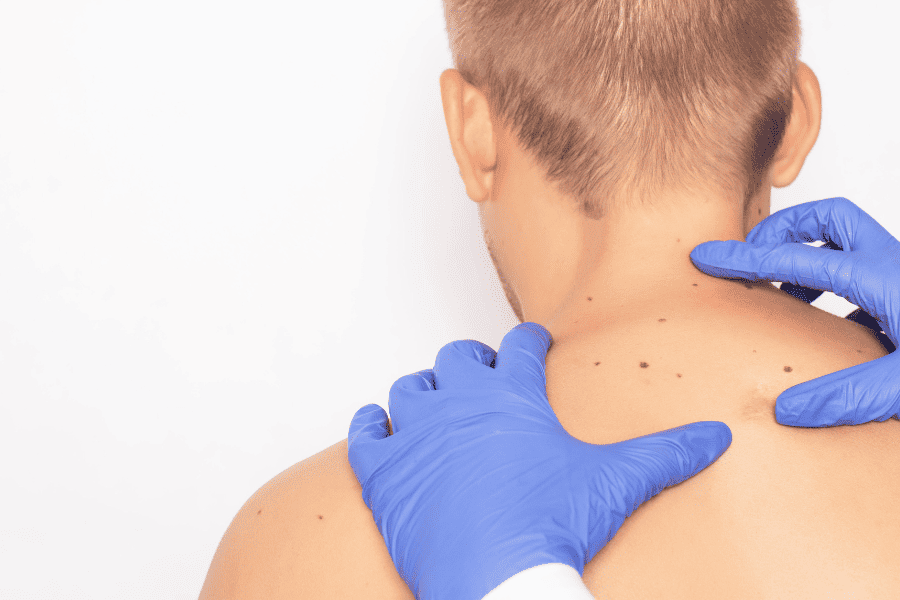
A skin cancer screening is a visual examination of the skin by a dermatologist to detect early signs of skin cancer. Early detection is crucial as it can increase the chances of successful treatment and reduce the risk of spreading.
How often should I get a skin cancer screening?
Annual screenings are generally recommended, especially for individuals with fair skin, a history of sun exposure, or a family history of skin cancer. Your dermatologist may recommend more frequent check-ups based on your risk factors.
What should I expect during a skin cancer screening?
During a skin cancer screening, the dermatologist will examine your skin for any unusual moles, spots, or growths. The exam is non-invasive, and if anything suspicious is found, a biopsy may be recommended for further analysis.
Are there signs of skin cancer I can watch for between screenings?
Yes, look for any new or changing moles, spots, or lesions, particularly those that are asymmetrical, have irregular borders, multiple colors, or are larger than a pencil eraser. If you notice anything unusual, schedule a dermatologist visit promptly.
Who is at higher risk for skin cancer and should get regular screenings?
People with fair skin, light-colored eyes, a history of sunburns, or a family history of skin cancer are at higher risk. Those who frequently use tanning beds or have a large number of moles are also encouraged to get regular screenings.