Precancers (Actinic Keratoses)
Home » Medical Dermatology » Precancers (Actinic Keratoses)
What are actinic keratoses?
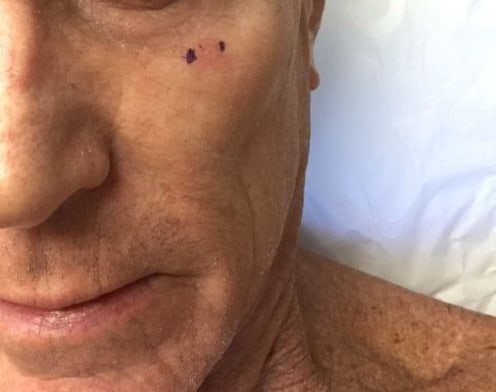
Actinic keratoses (AKs) are skin conditions caused by chronic sun damage. This damage causes scaly, rough, or bumpy spots on the skin that can appear red or brown. AKs are not cancerous but can be pre-cancercous: some of them will change into squamous cell skin cancers, which is the second most common form of skin cancer, so they are important to treat. Having consistent sun exposure (like living in Arizona) raises your risk of getting AKs.
Risk Factors for Actinic Keratoses:
- Spend a lot of time outside and have frequent sun exposure (or a history of doing so when younger).
- Have fair (light) skin and hair, and/or freckles.
- Sunburn easily.
Most actinic keratoses show up in the following sun-exposed areas:
- Top of ears
- Backs of hands and forearms
- Legs or feet, especially in women
- Lower lip
- Skin around lip
- Nose
- Cheeks
- Neck Forehead
- Scalp
What does an actinic keratosis look like?
- Flattish and rough (sandpaper-like feel).
- Red, pink, skin-colored or brown.
- Itchy
- Thick, crusty, or scaly.
- Smooth and red bumps.
- AK’s on the lip (actinic cheilitis) will cause a rough, dry, or scaly spot that might crack or have a sore.
Start your journey
to Beautiful skin!
How is an actinic keratosis diagnosed?
Most healthcare providers can diagnose actinic keratosis just by examining the skin. If they see the symptoms listed above, they can usually tell what it is. A special polarized light (dermatoscope) can also be used to get a closer look at the skin cells. A biopsy can also be taken to get a more accurate diagnosis.
How are AKs treated?
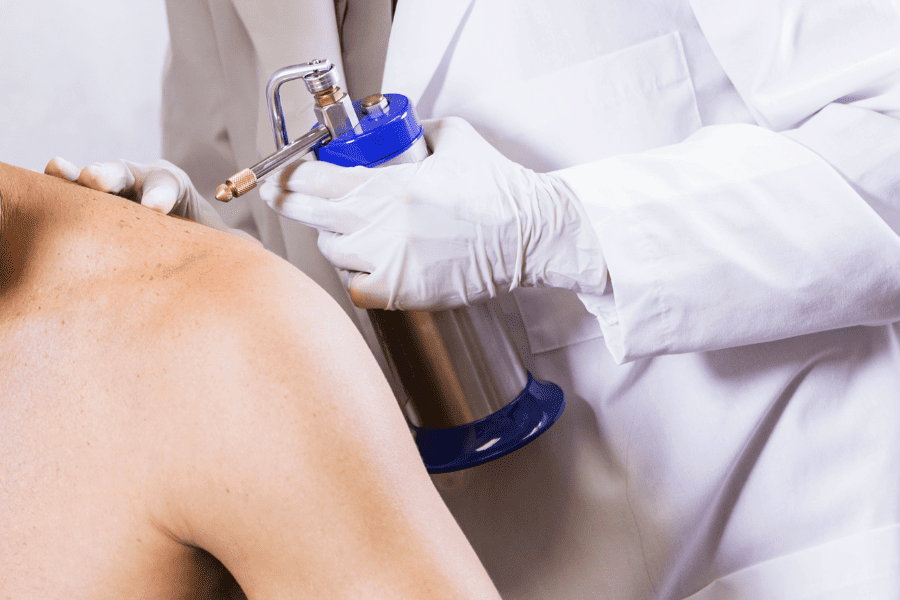
Most commonly, they are frozen off with liquid nitrogen (“cryotherapy”) to prevent them from turning into a squamous cell carcinoma or skin cancer. If left untreated, the condition can turn into skin cancer. Ensuring the skin is treated promptly is important.
While cryotherapy is the gold standard for spot treatments of AKs, there are several global treatments that are also available. These treatments include photodynamic therapy (BLU-U® with Levulan or Ameluz), topical chemotherapy creams (such as Efudex), and chemical peels/skin peels (such as medium-depth trichloroacetic acid, TCA, peels). Each of these treatments causes local destruction of the precancerous cells, which allows the skin to regenerate with new, healthy cells over several weeks. These treatments utilize different mechanisms to destroy the abnormal skin, so there are different risks and benefits associated with each treatment. Our physicians and physician assistants can discuss the specifics of each treatment and determine a plan that is ideal for your health.
Faqs
Expect some redness, swelling and irritation for around 7-10 days after treatment. Sometimes a blister will form. Thicker or larger lesions may take longer to heal. After 2 weeks, some red or pink may remain, but the spot of skin that was treated should feel smooth. If there is still some roughness or redness, the spot should be retreated. Although most AKs only require one treatment, some may require 2-3 treatments. No special care is required after treatment. You can wash your skin with a gentle cleanser and apply your face products and sunscreens as normal. If you use harsh products, such as benzoyl peroxide, glycolic acid, salicylic acid, or tretinoin (Retin-A), the treated spots may be irritated for longer.
If you are scheduled for a BLU-U® treatment, you should expect to be in the office for about 2 to 3 hours. When you arrive, a medical assistant will room you, take some photos of the area to be treated, and will degrease your skin with isopropyl alcohol and acetone. After your skin has been prepped, the doctor or physician assistant will apply a photosensitive gel to the area. This gel will then have to incubate and absorb into your skin for two hours, during which, you can relax in our waiting room. After the two-hour incubation period, you will be brought back to the room, positioned under the BLU-U®, and given protective eyewear. The BLU-U® light will illuminate the area treated for 16 minutes and 40 seconds. This illumination activates the photosensitive gel which initiates the destruction process. It is normal to feel a burning sensation during this process. You will be given a fan and ice to help manage discomfort. After the treatment is complete, sunscreen will be applied. It is recommended that you also bring a hat if your face and/or scalp is treated.
For one week post-treatment, it is advised that you use strict sun protection including daily sunscreen, hats/long sleeves/pants, and avoiding the sun when possible. The area treated will be red, swollen, and irritated, and may peel for up to two weeks. Only gentle moisturizers and cleansers should be used until the skin heals. Your provider may want to see you for follow-up approximately six weeks post-treatment to assess your results and touch-up any persistent lesions with cryotherapy. While Blu-Light treatment is often covered through your insurance, a prior authorization may be necessary. Cash prices are also available.
There are several topical chemotherapies that your provider can prescribe including 5-fluorouracil (Efudex) and imiquimod. These medicated creams are often covered by insurance, but their out-of-pocket cost can still be high depending on your insurance. The duration and frequency with which your provider recommends you apply the cream may vary depending on the severity of your lesions, but the average treatment times range from 2-6 weeks, either once or twice a day. During your treatment, you will experience redness, irritation, tenderness, and peeling. These symptoms will likely last for 1-2 weeks post treatment but will gradually fade. It is imperative that strict sun protection is utilized during and in the weeks following treatment. Your provider may want to see you for follow-up to assess your results.
Chemical peels are another great option for the destruction of AKs. Mostly commonly, either 25% or 35% Trichloroacetic Acid (TCA) is used. Prior to the peel, photos will be taken, and you will be numbed with a topical numbing cream. Your skin will then be degreased with isopropyl alcohol and acetone. The provider will then apply a layer of the TCA to your skin. It is common to experience some burning while the peel is being applied. This sensation usually subsides within minutes, and cool gauze and a fan will be used to manage your discomfort. After the treatment, sunscreen will be applied. For 1-2 weeks post-procedure your skin will be red and will peel. Using strict sun protection during this time will be important to protect your skin and maintain your results. A TCA peel for the treatment of AKs is usually covered by insurance, but a prior authorization may be necessary.
Yes, protect your skin and lower your chance by:
Staying out of the sun, especially at the highest times of UV exposure (10 a.m. to 4 p.m.).
Wearing a broad-spectrum sunscreen. An SPF of 50 is best, but an SPF of at least 30 is recommended.
Reapplying sunscreen every 2 hours to exposed areas of skin.
Wearing a wide-brimmed hat, long-sleeved shirt, long pants, or long skirt outside.
DO NOT use tanning beds.
Since there are multiple treatments for AKs, our providers consider each patient individually to develop a treatment plant that is most suitable.
Please contact CLEAR Dermatology and Aesthetics Center if you would like to be checked for precancers.